

Fire sprinkler inspections are an important part of keeping a building safe, compliant, and ready in the event of an emergency. However, once the inspection is complete, the next step is just as important: understanding the results and addressing the deficiencies that were found.
For many building owners and property managers, the inspection report can feel like just another required document. You receive the report, see a list of deficiencies, and then have to figure out what needs to be repaired, how serious each item is, and what the next step should be. Some items may seem minor, while others are clearly more involved. Either way, the purpose of the inspection is to identify issues before they become larger problems.
One thing I have learned in my time working in sprinkler service is that an inspection report is not just paperwork. It is a useful tool that helps the building owner, the service provider, and the Authority Having Jurisdiction, often referred to as the AHJ, understand the condition of the fire protection system. The AHJ may be a fire marshal, fire official, code official, or another local authority responsible for enforcing fire and life safety requirements.
AHJs and fire marshals play an important role in the inspection and repair process. Their job is to help make sure fire protection systems are being maintained properly and that buildings remain compliant with applicable codes and local requirements. When deficiencies are noted during an inspection, the AHJ may require proof that the repairs are completed, especially if the issue affects the operation, monitoring, or overall reliability of the system.
This is why it is important to take inspection deficiencies seriously. The goal is not just to clear a report or satisfy a requirement. The goal is to make sure the fire sprinkler system is reliable and ready to operate if it is ever needed.
Some deficiencies are simple and can be corrected quickly. Others may require more coordination, material, access, or additional investigation before the repair can be completed. Regardless of the size of the repair, each item matters because fire protection systems are made up of many connected parts. Sprinkler heads, valves, gauges, backflows, fire pumps, flow switches, tamper switches, piping, and alarm devices all play a role in the system working properly.
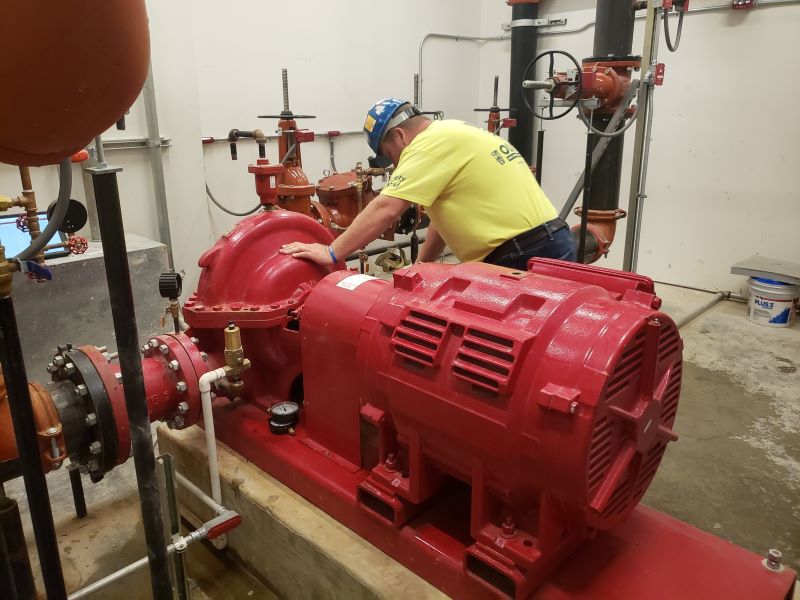
Fire sprinkler systems are designed to sit in the background and go unnoticed until they are needed. Because of that, small issues can be easy to overlook. The problem is that these systems need to work immediately during an emergency. There is no time to troubleshoot a closed valve, failed switch, leaking component, or damaged sprinkler head when the system is actively needed.
Repairs also help prevent small problems from becoming larger ones. A minor leak, aging component, or issue with monitoring may not seem urgent at first, but delaying the repair can create bigger problems later. It can also lead to failed follow-up inspections, compliance issues, or added pressure from the fire marshal if repairs are not addressed in a timely manner.
Coordination is also a major part of completing repairs. Many sprinkler repairs require a system shutdown, draining, refilling, and testing. In occupied buildings, this often means working with property management, tenants, maintenance staff, security, and sometimes the fire alarm vendor. Access may be needed above ceilings, inside tenant spaces, in stairwells, mechanical rooms, pump rooms, or exterior areas around the building.
From the service side, the best repair process usually starts with communication. Building owners and property managers should review the inspection report, ask questions about anything that is unclear, and work with their service provider to understand what needs to happen next. Some repairs can be scheduled right away, while others may need a survey or additional information before accurate pricing can be provided.
Being newer to the industry has made one thing clear to me: fire protection is a team effort. The inspection technician identifies the issue, the service team helps build the repair plan, the customer helps coordinate access and approval, and the AHJ helps make sure the building remains compliant and protected. When everyone understands their role, the process becomes much smoother.
The goal after an inspection is not just to get a deficiency removed from a report. The goal is to make sure the system is in proper working condition and that the building is better protected moving forward.
A fire sprinkler system is one of the most important life safety systems in a building. Keeping up with inspection repairs is one of the simplest ways to make sure it is ready when it matters most.

Article by Connor Kendrick
Sales Representative – Sprinkler Service