

Article by Dale Grant
The cannabis industry continues to expand rapidly across the United States, presenting unique operational, regulatory, and safety challenges. Dispensaries and cultivation facilities must navigate strict state and local rules while safeguarding high-value inventory, ensuring employee and customer safety, and maintaining business continuity.
In this high-risk environment, properly designed fire protection and security systems are essential for risk management, regulatory compliance, and long-term operational success.
Managing Risk in High-Value Environments
Cannabis facilities face elevated risks due to valuable cash and product inventory in dispensaries, as well as high-value crops and specialized equipment in cultivation and processing sites. A comprehensive, layered security strategy helps mitigate theft, unauthorized access, and operational disruptions.
Effective systems typically include:
- Surveillance systems providing continuous, high-resolution coverage of entrances, sales floors, grow rooms, storage areas, and perimeters.
- Access control systems that limit entry to authorized personnel and maintain detailed logs of movement.
- Intrusion detection and alarm systems that deliver real-time notifications of unauthorized access.
- Panic buttons and duress alarms for immediate staff response during emergencies.
Advanced setups often incorporate remote, real-time monitoring to verify alarms quickly, enabling faster and more targeted responses. These layered defenses not only protect assets but also support insurance requirements and reduce liability.
Supporting Compliance and Accountability
Cannabis operations are subject to stringent state and local regulations governing security and monitoring. Common requirements include 24/7 video surveillance, restricted access to sensitive areas, and thorough recordkeeping.
Well-designed systems help meet these obligations by:
- Capturing and securely storing video footage for the required retention period (typically 30 to 90 days, though some jurisdictions mandate longer).
- Generating detailed, audit-ready logs for access, alarms, and system activity.
- Ensuring high system reliability with redundancy to minimize downtime that could trigger violations.
Non-compliance can result in significant fines, temporary shutdowns, or loss of licensure. Because regulations vary widely by state and municipality, partnering with experienced integrators familiar with local rules is critical.
Addressing Fire Protection Challenges
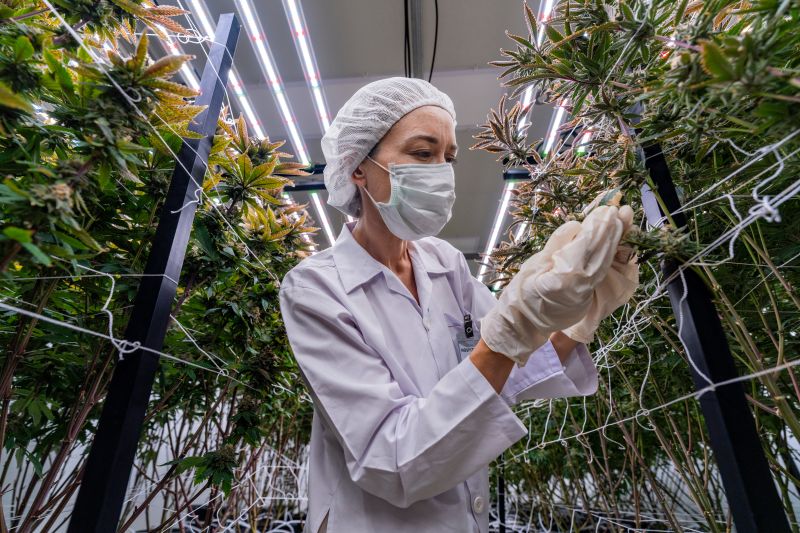
Fire risks in cannabis facilities are heightened by unique operational conditions. Cultivation and processing areas often involve dense electrical loads from lighting, HVAC, dehumidification, and environmental controls. Electrical issues, such as overloaded circuits, faulty wiring, improper connections, or inadequate grounding, are among the most common causes of fires in grow operations.
Effective fire protection requires tailored planning based on the facility type, size, and occupancy classification (often F-1 for industrial grow spaces or M for retail dispensaries). Key elements include:
- Sprinkler systems designed to the appropriate hazard level (wet, dry, or pre-action systems per NFPA 13 and local amendments).
- Fire alarm and detection systems compliant with NFPA 72 for early warning and occupant notification.
- Carbon monoxide and other gas detection where generators, fuel-fired equipment, or enclosed environments warrant it.
- Routine inspection, testing, and maintenance programs to ensure ongoing reliability.
Note that a dedicated national standard, NFPA 420 (Standard on Fire Protection of Cannabis Growing and Processing Facilities), is currently in development, with the first edition expected in 2027. Until then, facilities rely on the International Fire Code (IFC), NFPA 1, and jurisdiction-specific amendments. Extraction processes involving flammable solvents may trigger additional hazardous materials (Group H) requirements.
Custom engineering is essential, as one-size-fits-all approaches rarely suffice.
Integrated Systems for Greater Efficiency
Integrating fire protection, security, and monitoring systems into a single unified platform delivers significant operational advantages. This convergence provides centralized visibility and improves coordination during incidents.
Benefits of integrated systems include:
- Monitoring fire alarms, intrusion events, and video feeds from one interface.
- Real-time video verification of alarms to reduce false dispatches and speed response.
- Streamlined generation of compliance reports and audit documentation.
- Faster, more informed decision-making during emergencies.
Many modern platforms also support integration with seed-to-sale tracking systems, further simplifying regulatory oversight.
Built to Support Growth
As cannabis businesses scale, adding locations, increasing production capacity, or adapting to evolving regulations, their protection infrastructure must keep pace.
Scalable solutions enable operators to:
- Expand system coverage seamlessly as facilities grow.
- Integrate emerging technologies (such as AI-enhanced analytics or improved detection) without full rip-and-replace.
- Maintain uniform safety and security standards across multiple sites.
Cannabis facilities operate in a complex, high-stakes environment where robust fire protection and security systems play a vital role in protecting people, property, inventory, and licensure. By addressing both immediate risks and long-term compliance needs, these systems help businesses operate safely and sustainably.
Given the significant variations in state regulations and local fire and building codes, facility owners should consult licensed security and fire protection professionals, engineers, and legal experts early in the design or retrofit process. Investing in quality, code-compliant, and future-ready systems is one of the most effective ways to reduce risk and support continued growth in this dynamic industry.