
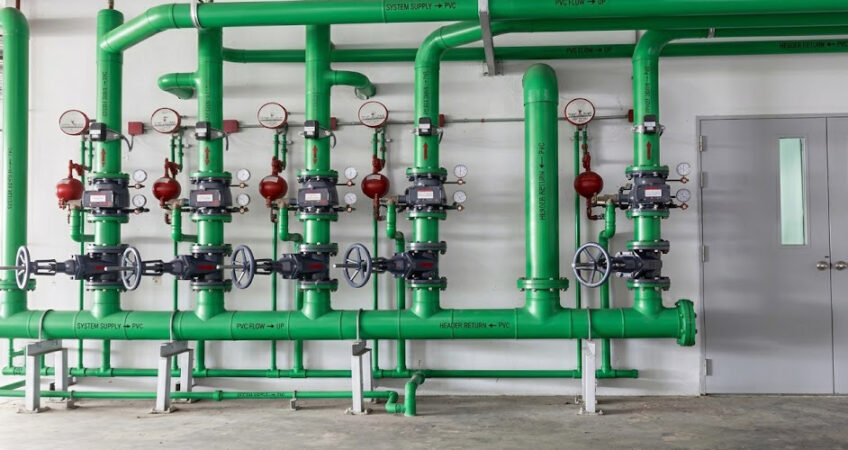
Fire sprinkler systems have long relied on steel piping because of their strength, durability, and well-established performance. However, ongoing issues such as corrosion, internal scaling, and maintenance demands have led to increased interest in alternative materials. Two areas receiving growing attention are self-healing materials and advanced polymer piping systems. While still developing, these technologies offer potential ways to improve reliability and reduce long-term maintenance concerns.
Corrosion as a Persistent Challenge in Fire Sprinkler Systems
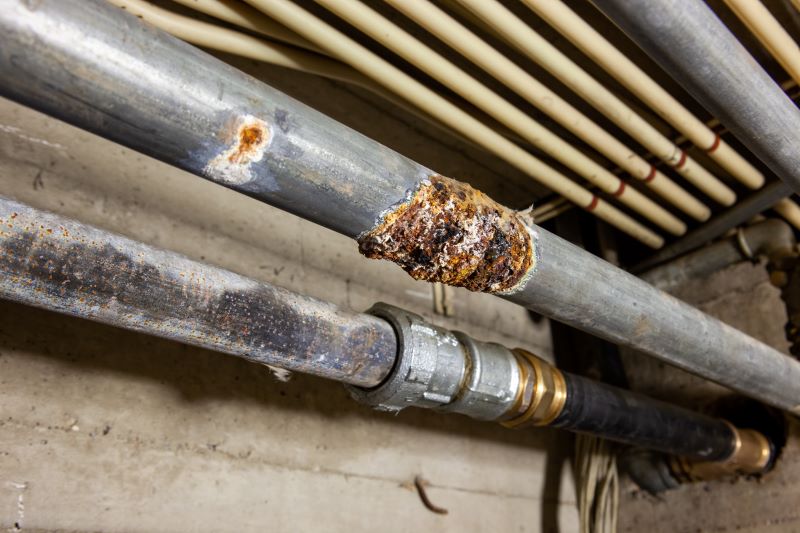
Corrosion remains one of the most common causes of failure in both wet and dry sprinkler systems. It typically occurs when oxygen, trapped air, or microbial activity interacts with water inside the piping. Over time, this can result in scale buildup, pinhole leaks, and restricted water flow, all of which reduce system effectiveness.
The National Fire Protection Association identifies corrosion as a leading contributor to system impairments and maintenance issues. Current mitigation strategies include corrosion-resistant coatings, nitrogen inerting systems, and routine inspections. While effective to a degree, these approaches do not always prevent localized damage or the formation of micro-cracks. This gap has encouraged further research into materials that can respond more dynamically to damage.
Self-Healing Materials
Self-healing materials are designed to repair minor damage without external intervention. In most cases, this is achieved through microcapsules embedded within a coating or polymer matrix. These capsules contain healing agents such as resins or corrosion inhibitors.
When a crack forms, the capsules rupture and release the healing agent into the damaged area. A chemical reaction follows, sealing the crack and restoring the protective barrier. This process can slow or prevent the progression of small defects into larger failures.
Research supported by the American Chemical Society has demonstrated the effectiveness of microcapsule-based systems in restoring protective coatings across several industries. While not currently used in approved fire sprinkler system components, similar concepts could potentially be applied to internal pipe coatings in the future. These coatings may help seal micro-cracks and maintain corrosion protection even after minor damage occurs.
At present, the technology remains in the research and early application stage. Most systems are limited to repairing small defects and may only function for a finite number of cycles. Manufacturing complexity and cost are also limiting factors. For these reasons, near-term applications are more likely to involve coatings or liners rather than fully self-healing pipes.
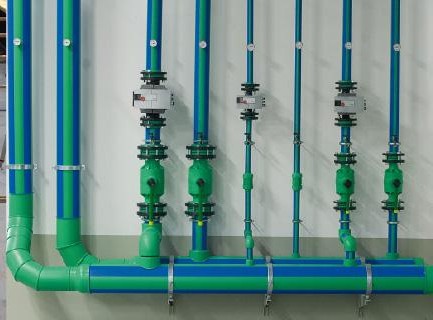
Image Courtesy of plasticpipe.org
Advanced Polymer Piping
Advanced polymer piping is already in use in certain sprinkler applications and offers a practical alternative to steel in specific environments. These materials are particularly effective in conditions where corrosion is difficult to control.
Chlorinated polyvinyl chloride, commonly known as CPVC, is widely used in residential and light-hazard commercial systems. It resists rust, scaling, and microbial corrosion, and its lighter weight allows for faster installation and reduced structural load.
Other polymer materials, such as polypropylene random crystalline temperature-resistant (PP-RCT), are being evaluated or used in limited and specialized applications but are not as widely adopted or approved for fire sprinkler systems as CPVC. PP-RCT provides improved temperature performance and mechanical strength compared to earlier polypropylene systems, and some designs incorporate fiber reinforcement to enhance durability while maintaining corrosion resistance.
Polymer piping also offers hydraulic benefits. Smooth interior surfaces reduce friction, which can improve water flow efficiency. In addition, joining methods such as solvent welding (for CPVC) and thermal fusion (for polypropylene systems) produce secure connections without the need for threaded fittings.
Performance and Code
Despite these advantages, polymer piping is not appropriate for all applications. Fire protection standards, including NFPA 13 Standard for the Installation of Sprinkler Systems, define where specific materials can be used based on hazard classification and system requirements.
Steel piping remains the preferred option in high-hazard and industrial environments due to its mechanical strength and resistance to external damage. Polymer systems are generally limited to residential, light commercial, and concealed installations.
Temperature sensitivity must also be considered. Although modern polymers are designed to withstand elevated temperatures, additional protection may be required in exposed or high-heat conditions.
Future Direction
Material development in fire protection is moving toward combined approaches rather than a single solution. One area of interest is the use of self-healing coatings applied to both steel and polymer pipes. These coatings could help reduce corrosion and address minor damage before it develops into larger issues.
At the same time, improvements in polymer chemistry are expanding the range of environments where plastic piping can be used. Emerging technologies such as sensor-enabled systems may also allow real-time monitoring of pressure, leaks, and corrosion activity.
Together, these developments point toward more resilient and efficient sprinkler systems with lower long-term maintenance demands.
The fire protection industry continues to evaluate new materials to address persistent challenges related to corrosion and system reliability. Self-healing materials and advanced polymer piping represent two promising areas of development. While self-healing technologies are still evolving, polymer piping has already proven effective in specific applications.
Ongoing research, testing, and code development will determine how these materials are used in the future. As infrastructure requirements increase and maintenance costs rise, material innovation will remain an important factor in improving the performance and longevity of fire sprinkler systems.

Ashlynn Coletti
Sales Estimator