
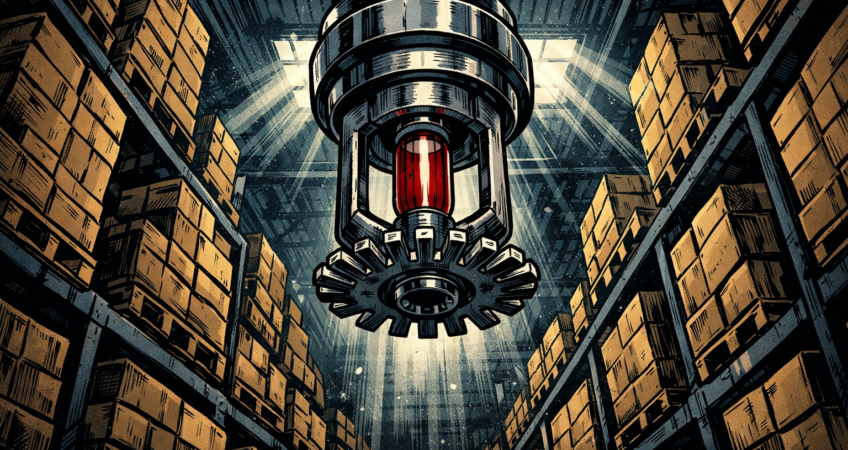
Fire sprinkler systems are built to respond quickly. In many cases, they control a fire before it has a chance to spread, limiting damage and protecting the people inside the building. For them to work the way they are intended, though, they need one simple thing that is easy to overlook in day-to-day operations: a little bit of space.
In storage rooms, warehouses, backrooms, and mechanical areas, it is surprisingly common for sprinkler heads to end up partially blocked. It rarely happens all at once. More often, it is the result of small, practical decisions made over time. A pallet gets set somewhere convenient, shelving gets adjusted, or boxes slowly start stacking a little higher than before. None of it seems important in the moment, and that is usually why it goes unnoticed.
During inspections, one of the most common things we see is materials stacked right up to the ceiling around sprinkler piping and heads. It usually isn’t intentional. People are trying to use the available space efficiently, and once something gets stacked in a certain spot, it tends to stay there. Because it becomes part of the normal layout, it often doesn’t raise any concerns, even though it can interfere with how the system is meant to work.
How Fire Sprinkler Obstructions Develop
Buildings are always changing, especially in areas where materials are stored. Inventory comes and goes, equipment gets moved, and spaces get reorganized to make work easier. Sometimes items get placed somewhere temporarily and simply stay there because the arrangement works well enough.
Things like stacked boxes, storage racks, or even signs and packaging materials can end up closer to sprinkler heads than intended. It is not usually a matter of negligence, just the normal rhythm of a busy workplace where efficiency takes priority and ceiling space is not something people think about very often.
Sprinkler heads are designed to spray water in a specific pattern. When that pattern is blocked, water may not reach certain areas as effectively. That can allow heat or flames to build in spots that are shielded, which can make a small incident harder to control than it needs to be. In a fire, those small differences in coverage can matter more than most people realize.
Why It Matters
Another thing worth keeping in mind is how storage conditions change over time. A space that once held lighter materials may gradually start holding heavier goods, plastics, or taller palletized items. Storage heights creep up, sometimes without anyone realizing how much they have changed from the original layout.
These kinds of shifts do not necessarily mean there is a problem, but they are a good reminder that sprinkler systems are designed around how a space is used at a given time. When usage changes, it is helpful to take a quick look and make sure clearances are still being maintained.
It is also worth remembering that sprinkler systems are engineered based on specific assumptions about fire behavior, fuel load, and water distribution. When obstructions interfere with that distribution, the system may still activate, but it may not perform as effectively as intended. The goal is not just to have sprinklers in place, but to make sure they can do their job properly.
Keeping Your System Ready
Most obstruction issues are easy to prevent with simple habits. Marking maximum storage heights can help employees keep materials within safe limits without needing to think about it constantly. Glancing upward during routine inspections or walkthroughs can also help catch problems early, before they become significant.
It can also help to keep sprinkler clearance in mind when reorganizing a space. When shelves are moved or storage layouts change, taking a moment to check the distance to nearby sprinkler heads can prevent issues from developing later.
When storage arrangements change significantly or when new materials are introduced, having the system reviewed can provide reassurance that everything is still working as intended. A quick evaluation can confirm that clearances are adequate and that the system still matches the way the space is being used.
Fire sprinkler systems are one of the most dependable forms of fire protection available, and they usually do their job without much attention. Giving them a little space and an occasional look is often all it takes to keep them ready for the moment they are needed. In many cases, small preventive steps like these are what make the difference between a minor incident and a major loss.

Article by Kyle Incao
Daywork Sales Estimator