
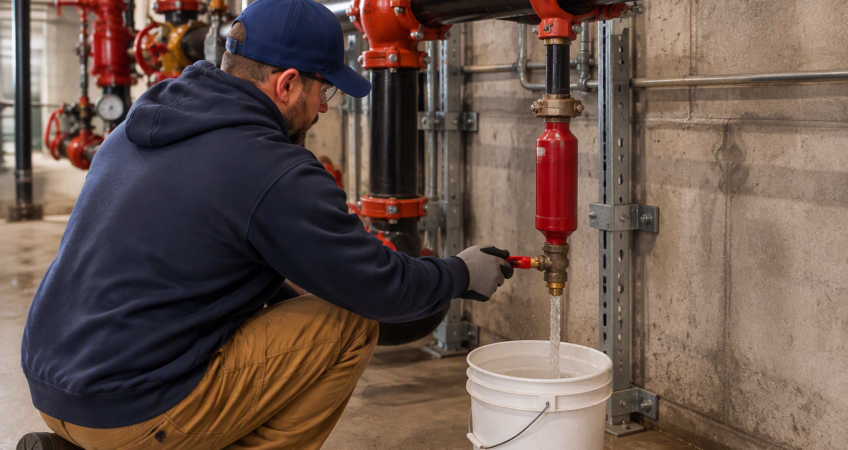
As we approach the cooler months, it’s important for building owners and facility managers to start thinking about an often-overlooked component of their fire protection system: low-point drains. Also known as auxiliary drains or drum drips, these drains are designed to remove moisture and condensation that can accumulate in dry-pipe and pre-action sprinkler systems.
Under NFPA 25, Standard for the Inspection, Testing, and Maintenance of Water-Based Fire Protection Systems, these drains need to be properly maintained and drained after system operation, before freezing weather arrives, and as needed throughout the cold-weather season. Removing accumulated water before temperatures drop is a critical step in helping protect your sprinkler piping from freezing and potential damage.
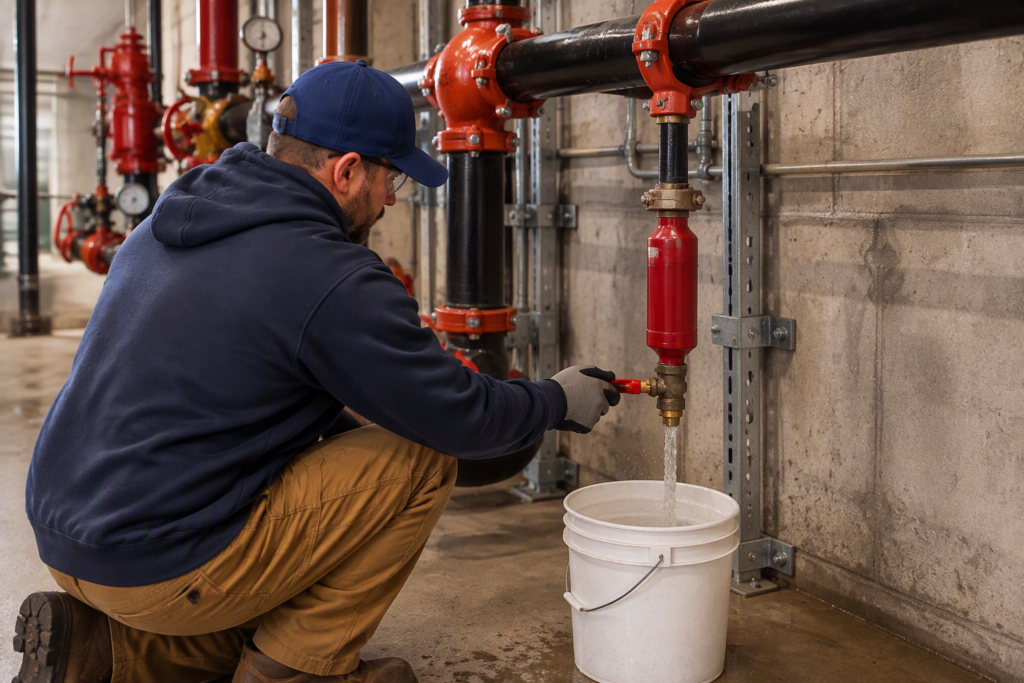
Why is this so important? Even though a dry-pipe system is designed to protect areas where freezing temperatures are a concern, moisture can still collect at low points within the piping. When temperatures fall below freezing, that trapped water can turn into ice, creating an obstruction or placing significant stress on the piping and fittings. A frozen system can lead to cracked or burst piping, water damage, system impairment, and costly emergency repairs. NFPA guidance emphasizes that auxiliary drains should be monitored and operated frequently during cold weather, with the frequency depending on how much water is being discharged. In other words, winterizing your fire sprinkler system shouldn’t be something you think about after the first freeze—it should be part of your preventative maintenance plan before cold weather arrives.
At Oliver Fire Protection & Security, we see firsthand what can happen when moisture is left sitting in a sprinkler system through the winter. Each year, we receive an unprecedented number of emergency service calls for frozen and burst sprinkler piping—problems that, in many cases, can be mitigated through proper inspection and preventative maintenance. Don’t wait for the first hard freeze to find out whether your system is prepared. If you have a dry-pipe or pre-action system, now is the time to make sure your low-point drains are properly identified, inspected, and maintained. Let Oliver help you get ahead of winter, protect your fire protection system, and avoid an unnecessary emergency call when you need your system most. Reach out to me to discuss your inspection and maintenance needs—we’re here to help you stay protected all winter long.

Article by: Jackie Carson
Business Development Specialist